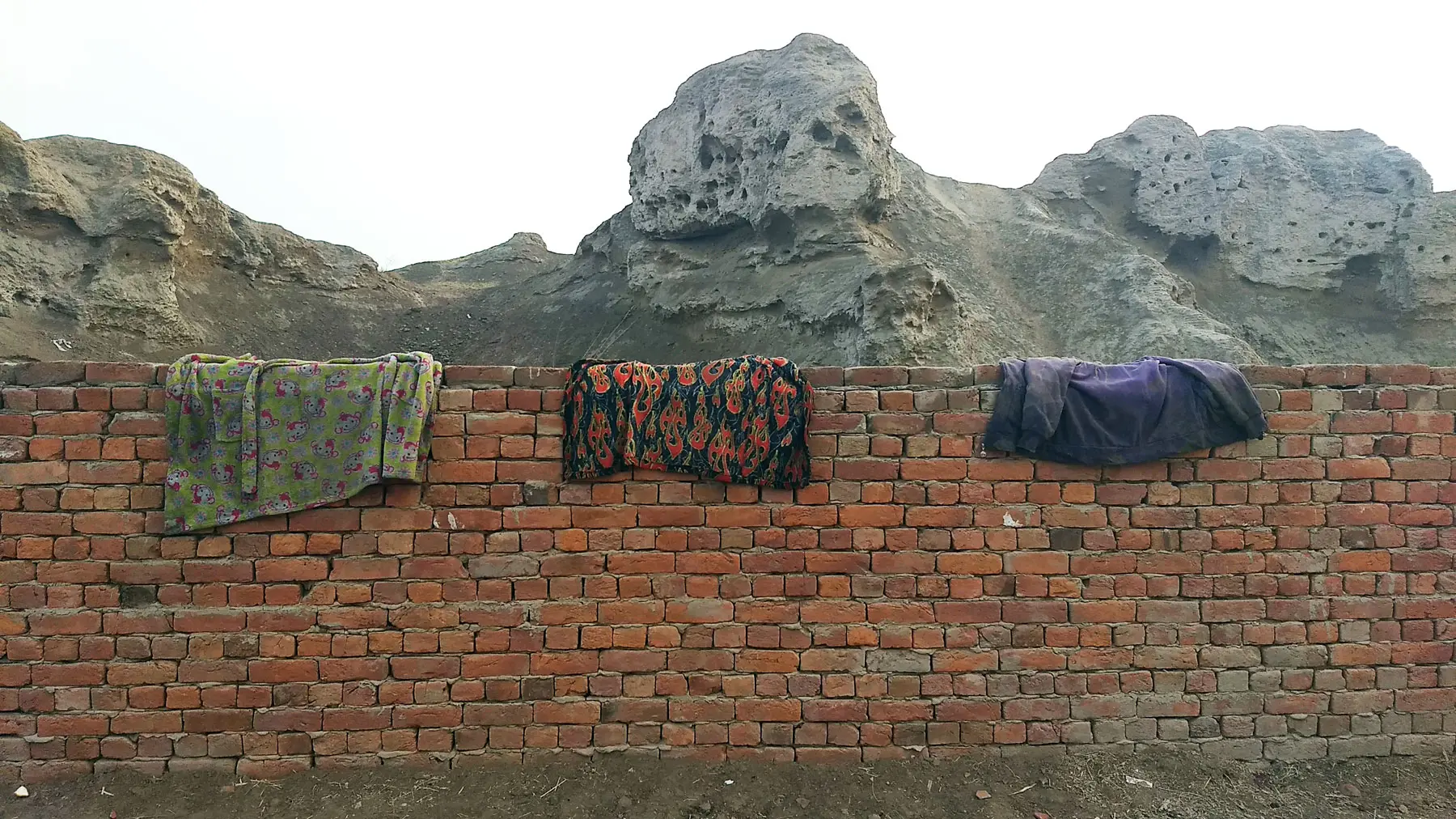
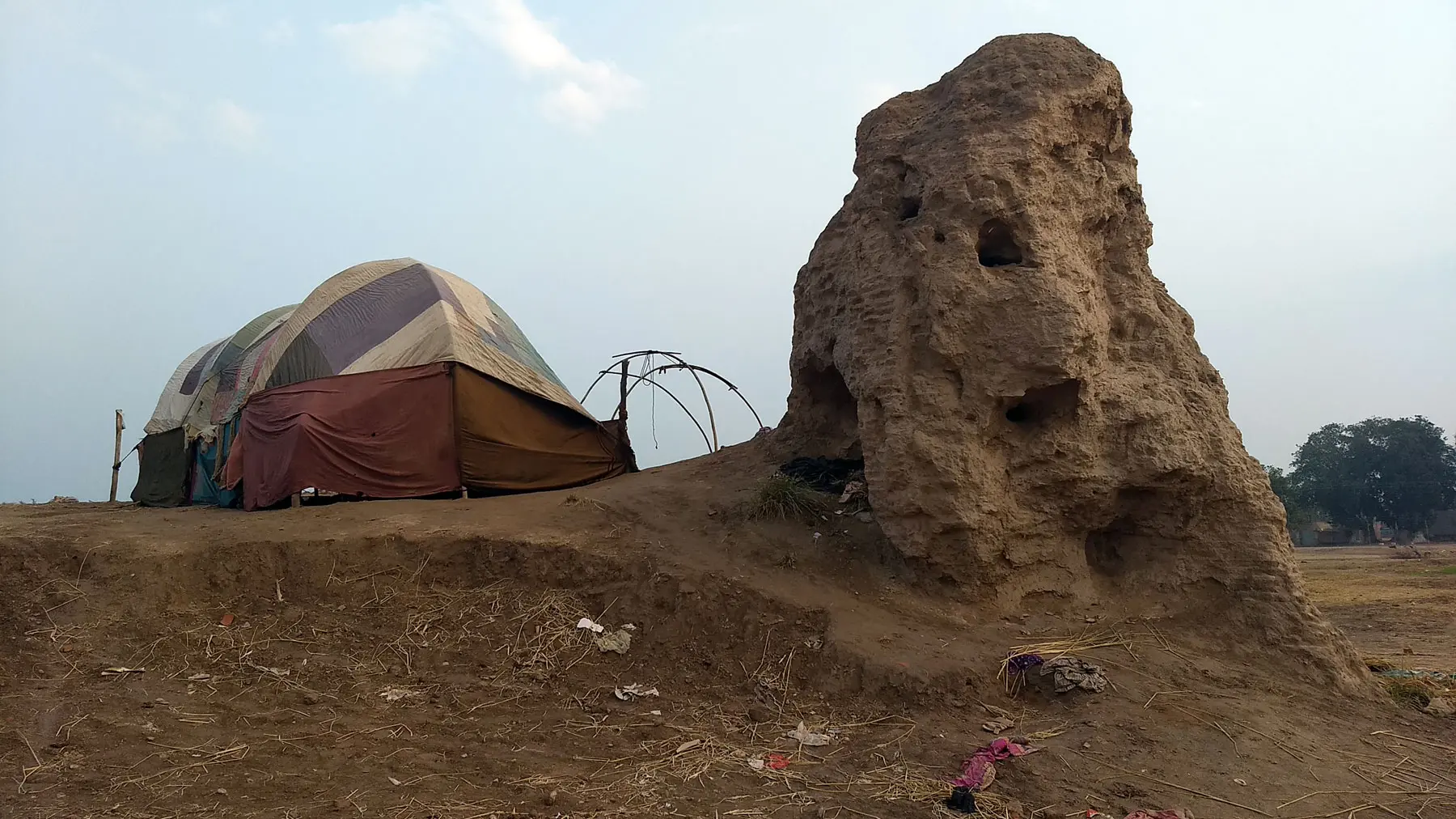
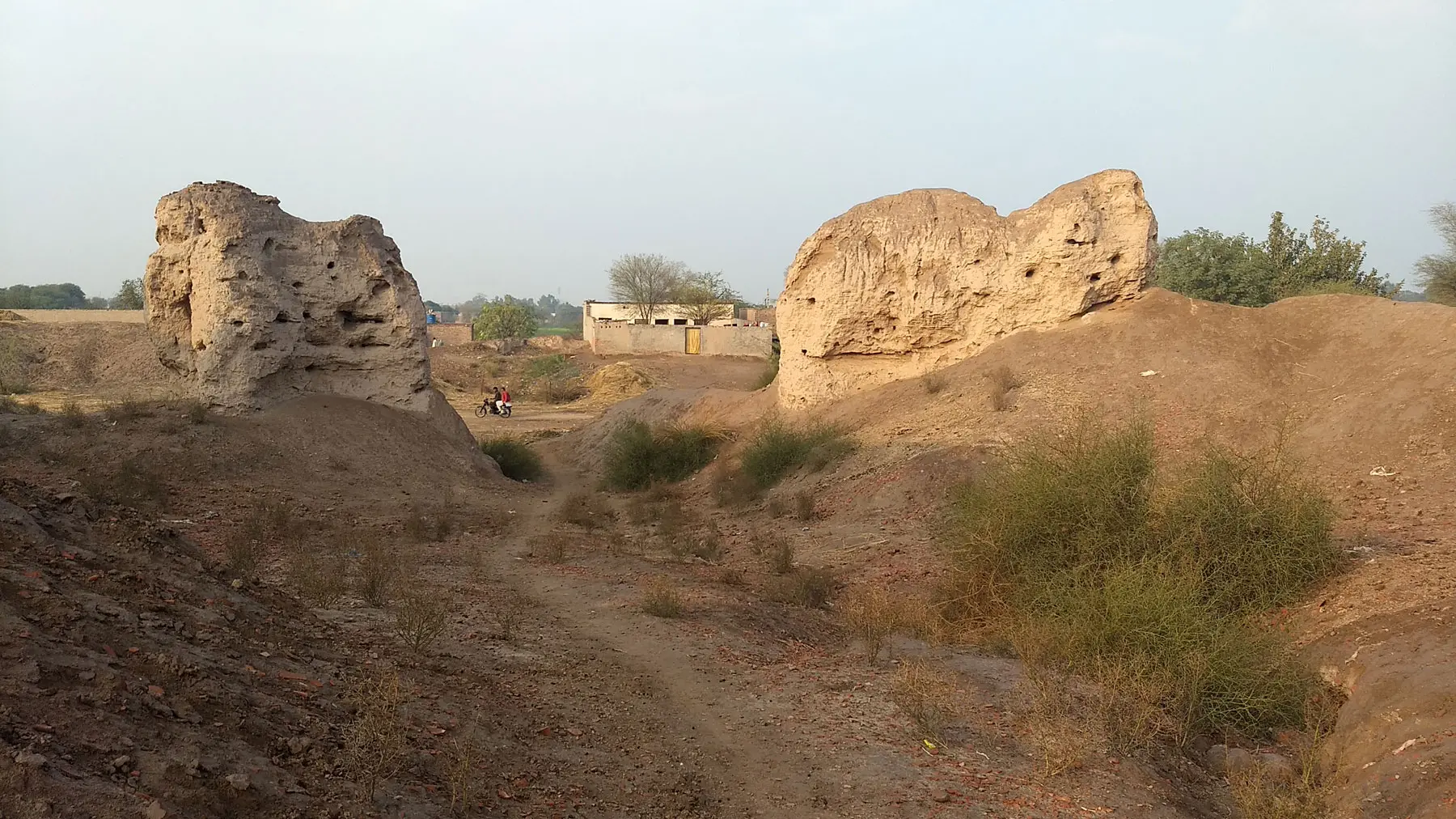
Farrukh’s work explored Tulamba, his hometown and an ancient archaeological site in southern Punjab. Documenting a place deeply familiar from childhood became a way of considering migration, urban expansion and collective memory.
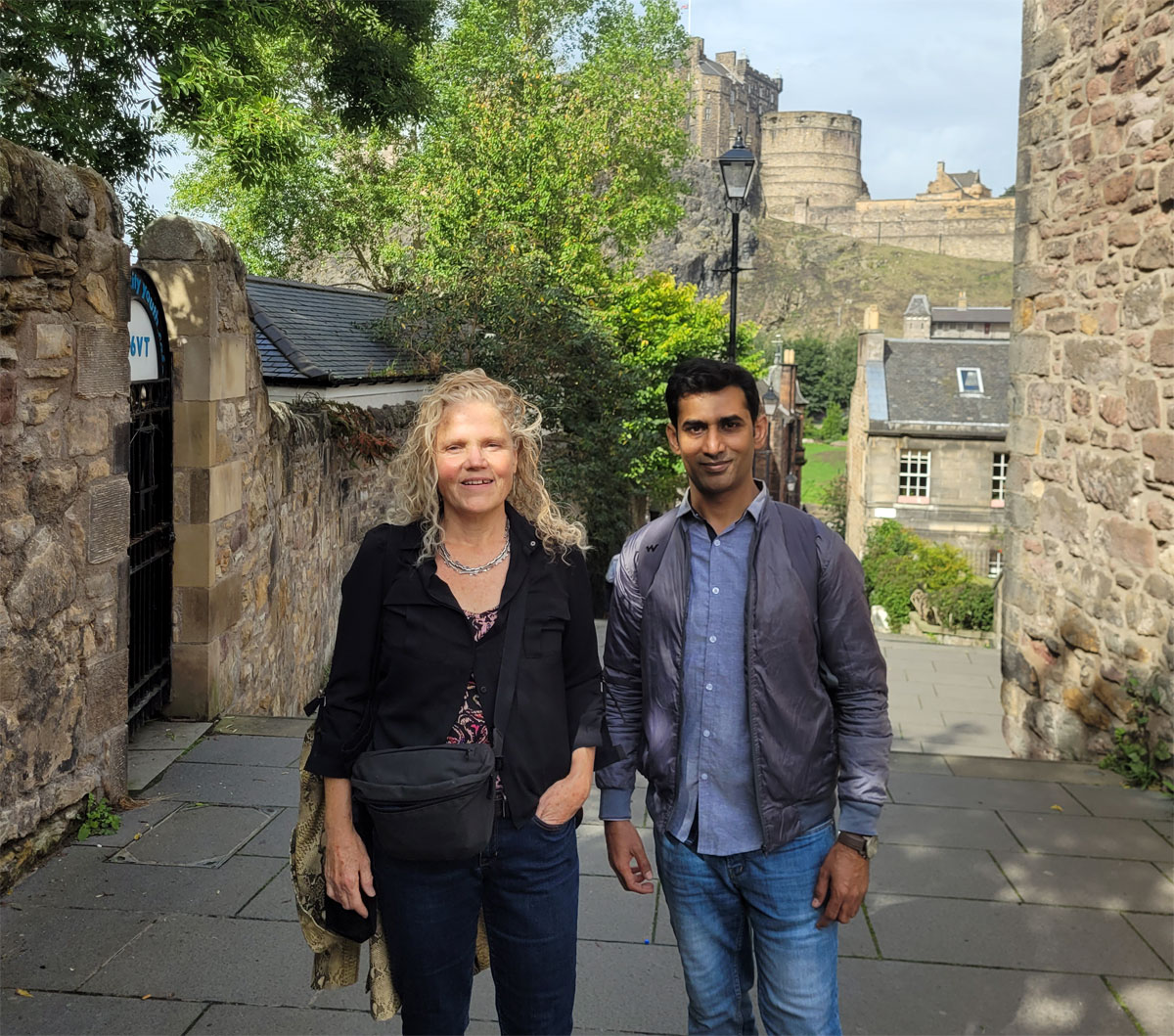
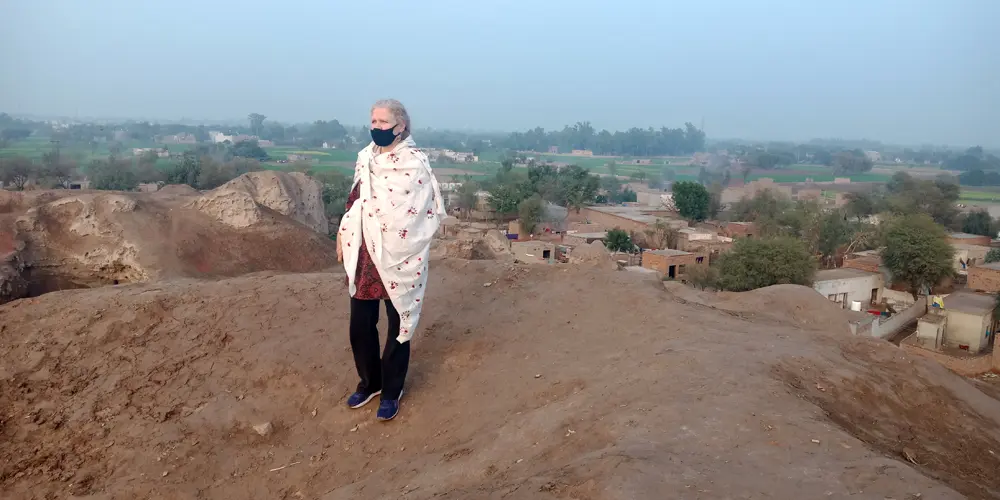
In January 2022, after a long flight from Edinburgh to Lahore, Farrukh and I finally met in person. After several days exploring Lahore and meeting artists and colleagues, we travelled south through mustard fields and date palms to Tulamba, the village where he grew up.
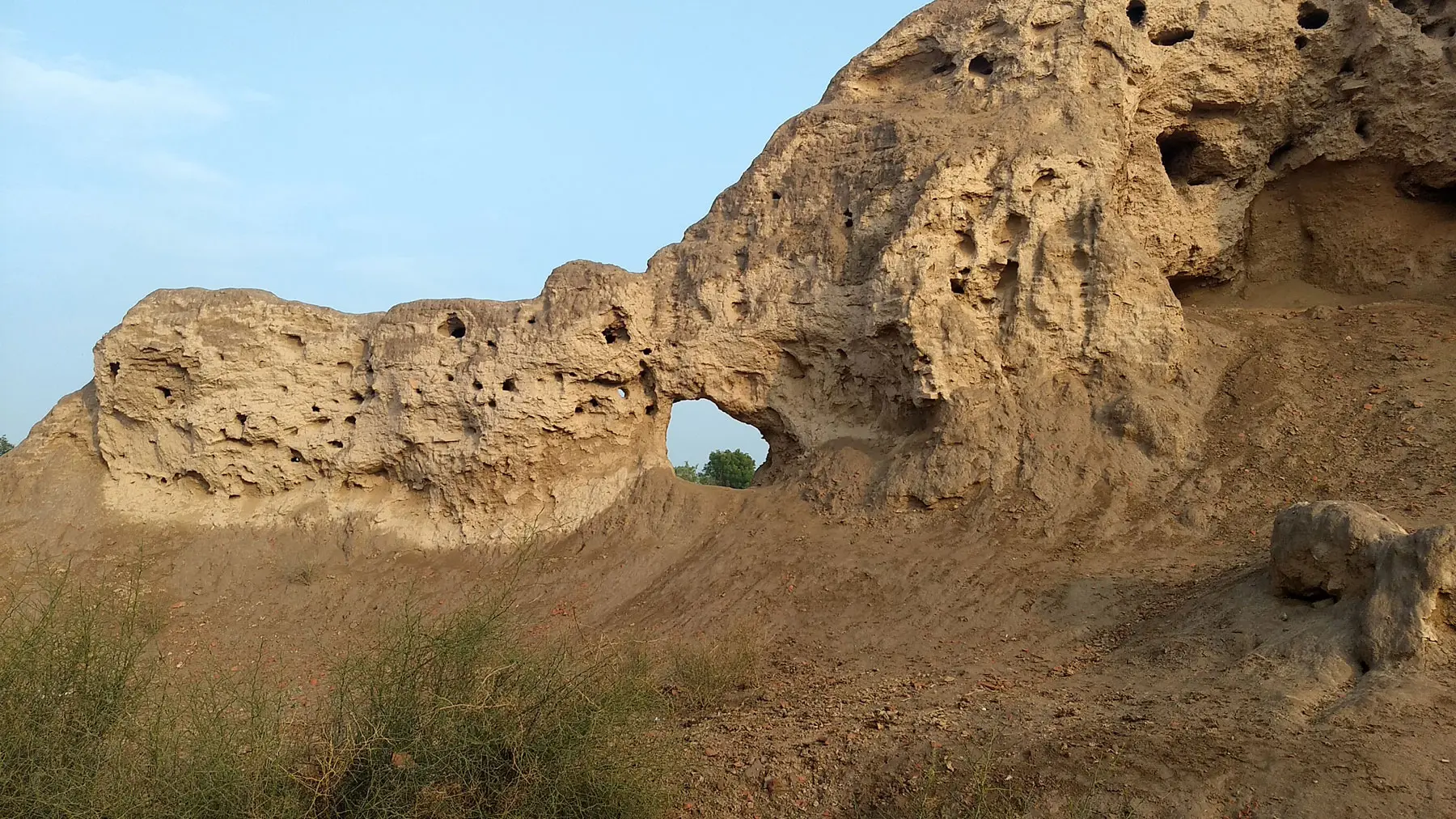
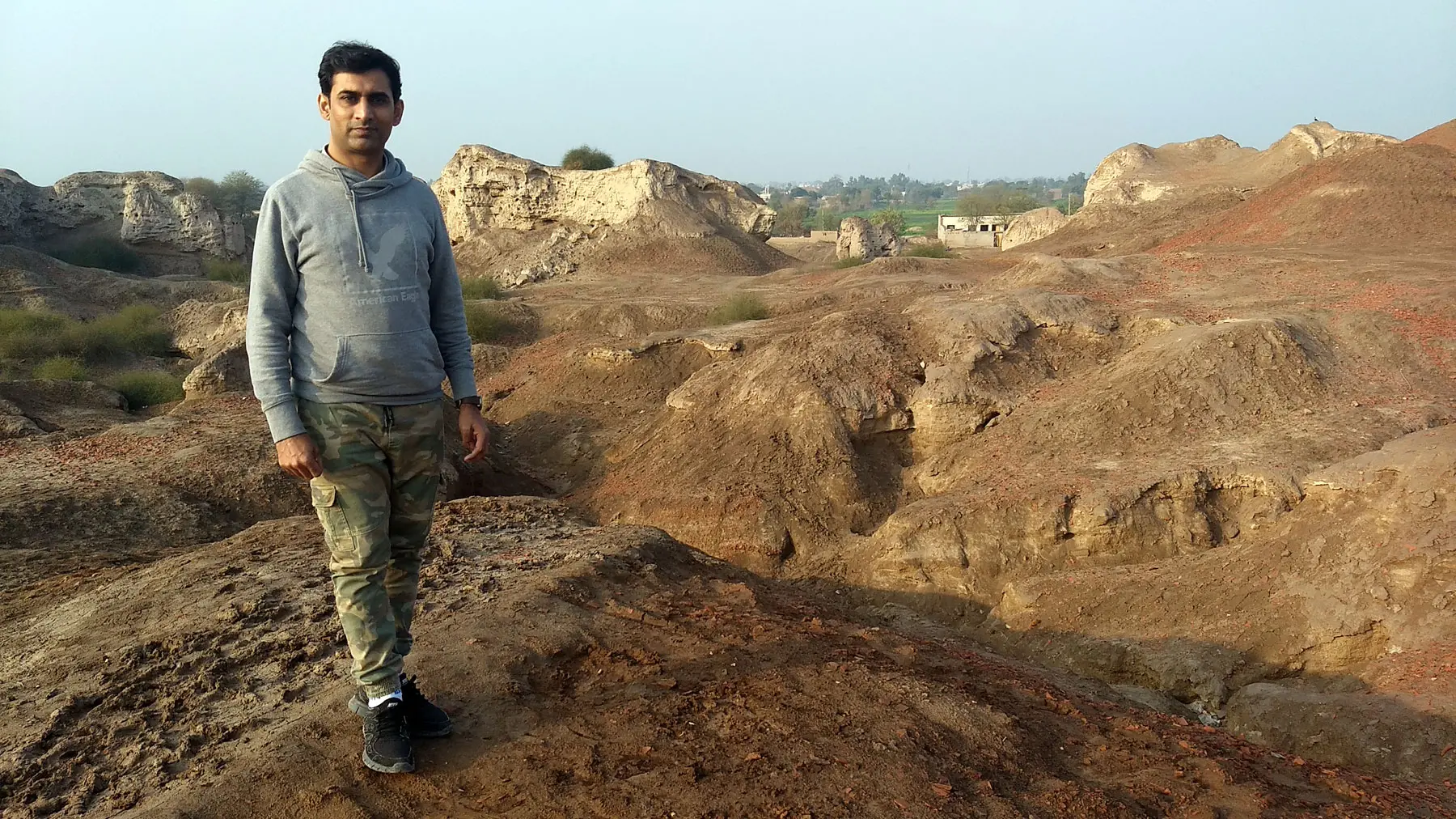
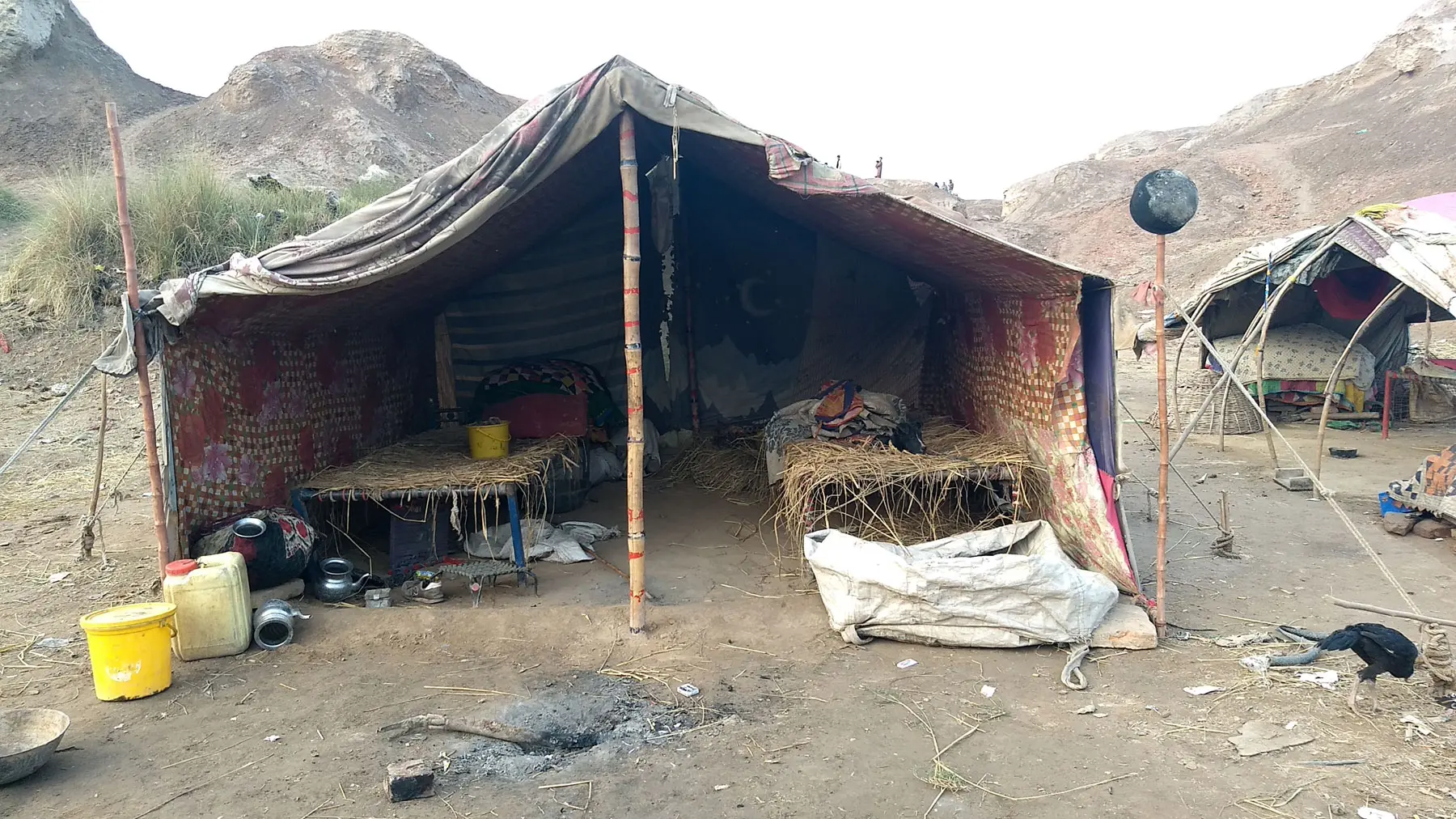
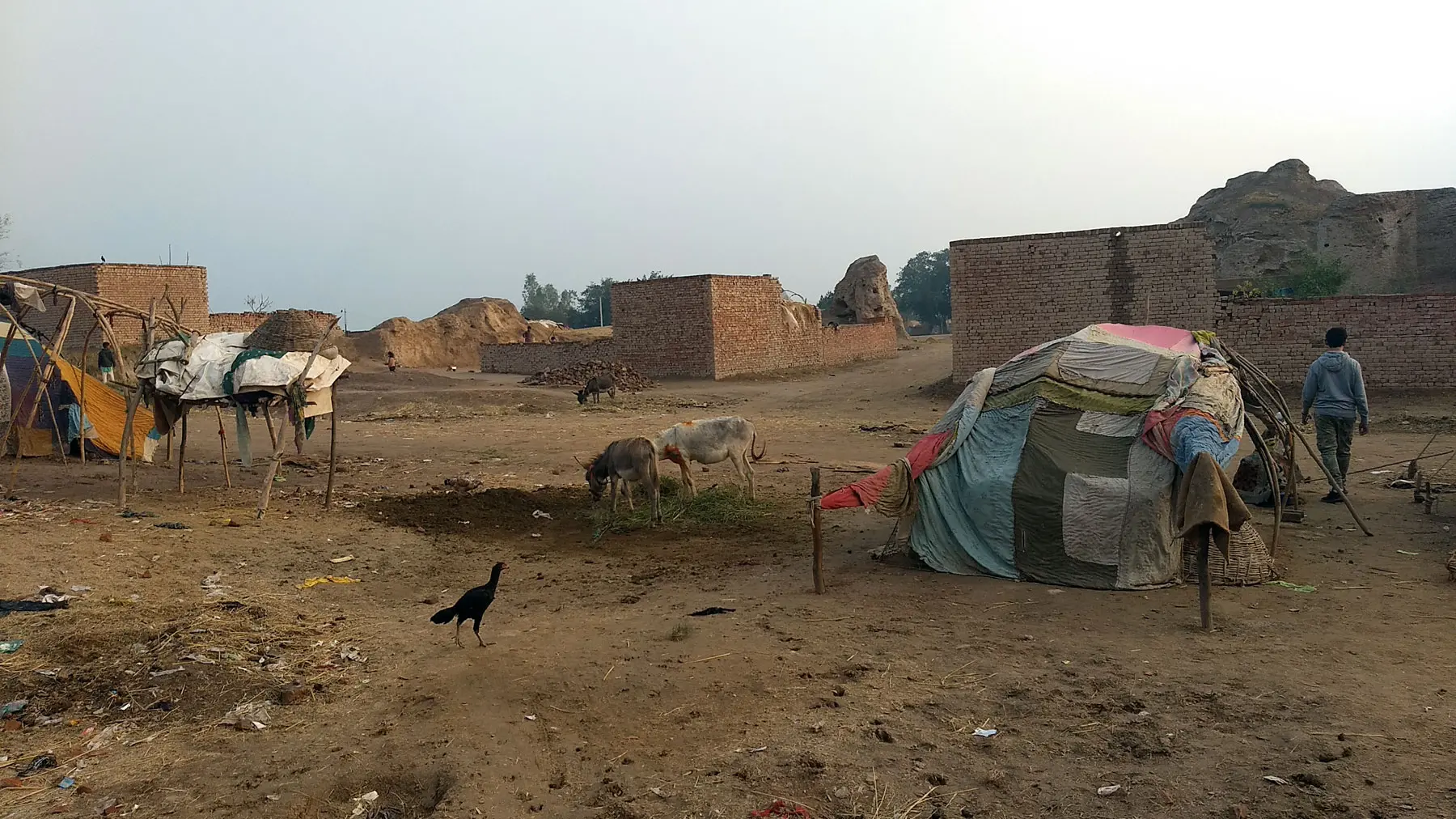
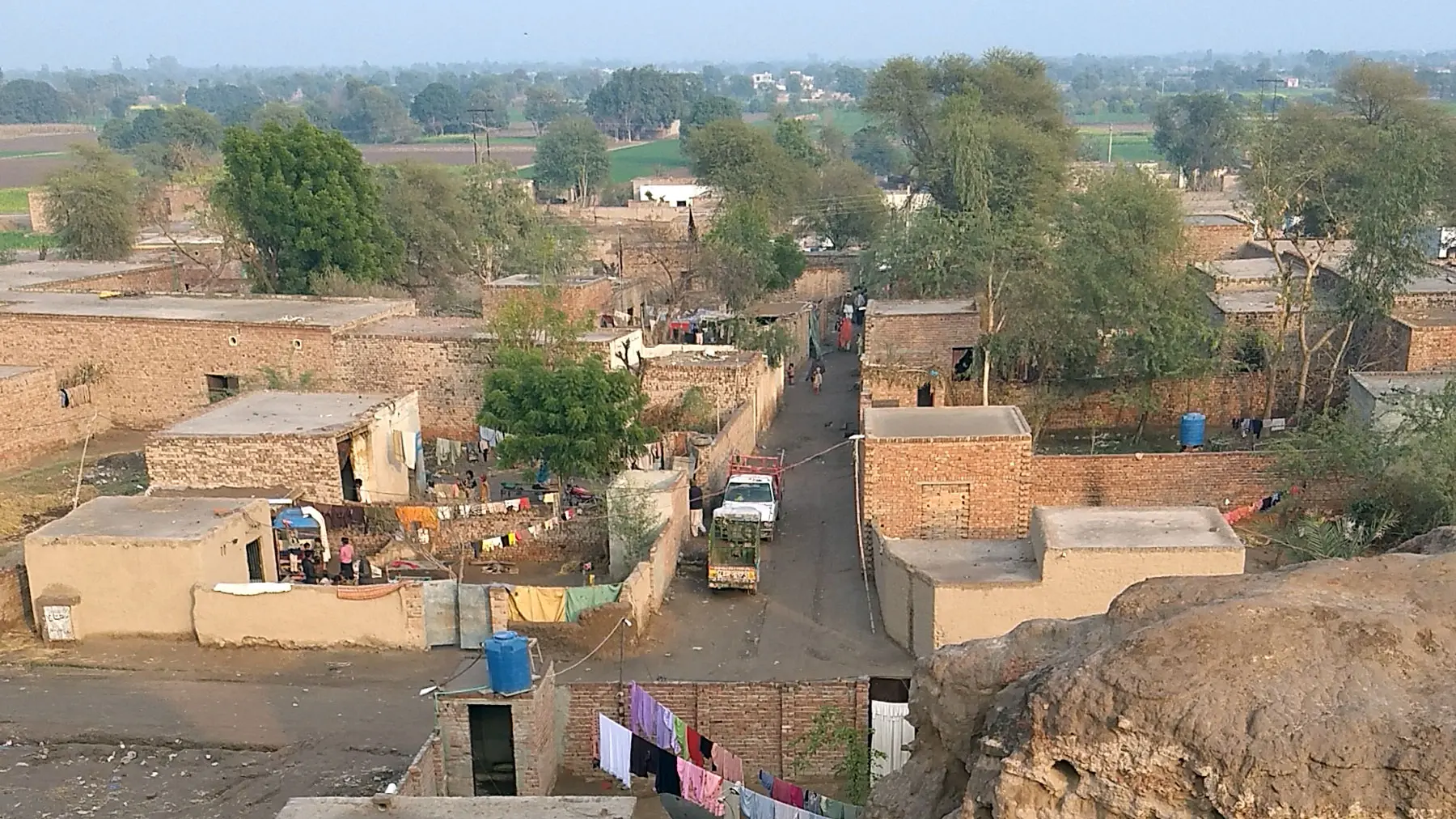
Visiting Tulamba offered a glimpse into the landscape and histories that had shaped Farrukh’s life and work. Over 2,000 years old, the village sits beside an ancient archaeological site excavated during the 1960s and later abandoned. Today, contemporary life and ancient ruins exist side by side as the town slowly encroaches upon the site.
In the area we visited, families were living among the ruins and fragments of pottery — even human bones — remained visible in the terracotta earth. At sunset, children moved across the landscape like a flock of birds, carrying a strange timelessness. I felt I was only beginning to glimpse the deep layers of history and culture beneath the surface, yet the experience registered deep within.